History Trivia Quiz Games
Battery Stats SaverTrivia
4.9121.00 Reviews
- Version
- 6.1.0
- Installs
- 100.00K
- Age Rating
- Everyone
Screenshots
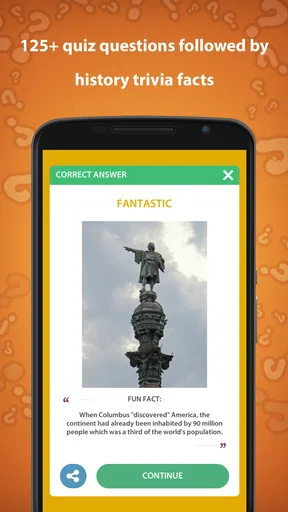
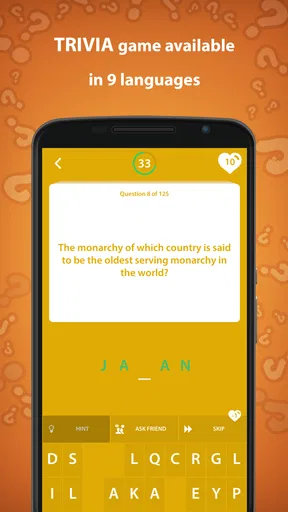
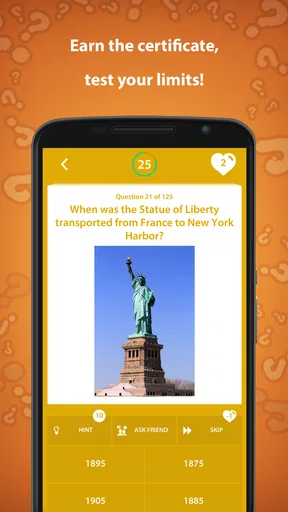
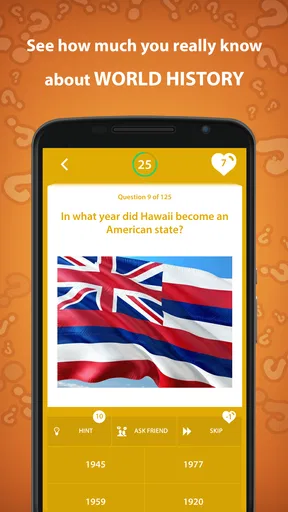
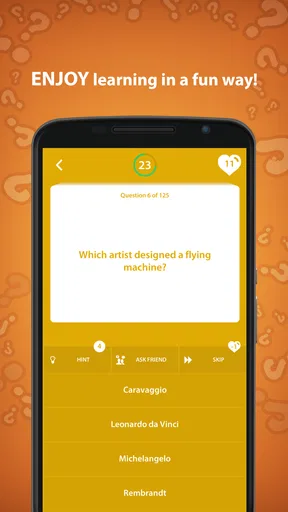
Our Review of History Trivia Quiz Games
 Analysis by Appyee
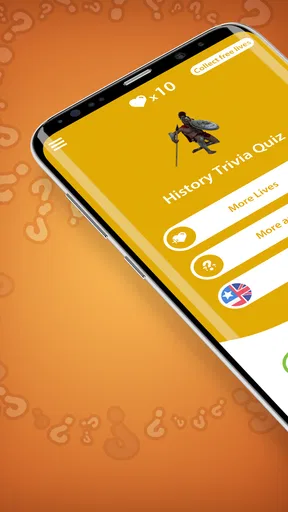
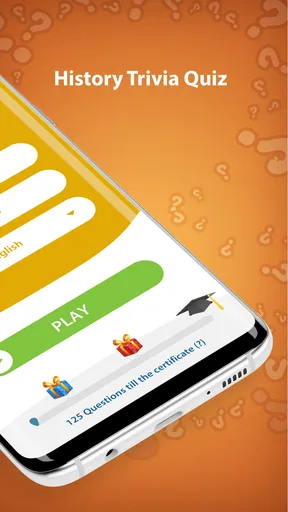
I went into History Trivia Quiz Games expecting a simple way to pass a few spare minutes, and that is still where it makes the most sense to me. It is a free history trivia game from Battery Stats Saver, aimed at anyone who enjoys testing memory about the past without opening a textbook first. The presentation is built around questions rather than a large adventure, story campaign, or complicated collection system, so the appeal depends heavily on whether you enjoy recalling facts and learning from mistakes.
What I like most is the low barrier to starting. You do not need to prepare a study plan, choose a historical period in advance, or commit to a long session. A quick round can work during a commute, while waiting for an appointment, or as a light activity after dinner. The game’s purpose is clear: use trivia to broaden your knowledge of world history. That straightforward focus is also its main limitation, because players looking for a rich strategy layer or a substantial narrative may find the experience too narrow.
How the quiz creates a reason to keep playing
I find the best reason to return is not a streak or a grand reward, but the chance to check whether a fact that once caught me off guard has started to stick. That makes each session a small, personal test rather than a race. In a shared household, it can also give people a natural prompt to compare what they know and decide which historical topic deserves a closer look.
The first goal is simple, but useful
My first objective was not to chase a score. It was simply to see how much I actually remembered once the questions moved beyond the familiar names and dates taught in school. That makes the opening experience approachable. I could begin with general knowledge, notice where I hesitated, and use each mistake as a prompt to investigate the subject later.
This is an important distinction from a conventional history reference app. A reference tool usually starts with a search box or a long list of subjects, while this game puts the question first. I am asked to retrieve information before I read about it. That small change makes the activity feel more active, even when the individual question is brief.
For a younger player, the early goal can be building confidence with recognizable historical material. For an adult, it may be discovering how uneven personal knowledge can be. I might remember a famous ruler but struggle with the surrounding period, or recognize an event without recalling where it happened. The quiz format exposes those gaps quickly, which gives a session a practical purpose beyond entertainment.
Progress feels personal rather than elaborate
The clearest progress signal is my own performance. Each answer tells me whether I knew the fact, guessed correctly, or need to revisit the subject. That may sound modest compared with games that offer maps, collections, characters, or elaborate reward tracks, but it suits the educational side of this title. I can measure improvement by answering questions that previously caused hesitation.
I recommend keeping a small note outside the game if you want a stronger learning loop. When I miss a question, I write down the person, place, event, or period involved, then look it up later in a reliable history source. Returning to the quiz after that turns a wrong answer into a short study cycle. The game itself is better at prompting curiosity than replacing careful reading, so this extra step adds depth without making the sessions feel like homework.
Another useful approach is to avoid treating a correct guess as complete knowledge. Trivia questions often reward recognition, but recognition is not the same as understanding causes, consequences, or context. If I select the right answer because it looks familiar, I still mark it as a topic worth checking. This is one of the best ways to use a quiz as a learning aid rather than as a collection of isolated facts.
The difficulty curve depends on your background
History trivia has a naturally uneven difficulty curve because players arrive with different interests. Someone who reads about ancient civilizations may find related questions comfortable but struggle with modern political history. Another player may have the opposite experience. I would not judge the game’s challenge only by how quickly I answer; I would judge it by whether it keeps exposing areas I have neglected.
That unevenness can be motivating, but it can also create frustration. A run of unfamiliar questions may feel less like a gradual lesson and more like a sudden wall. Players who prefer carefully staged tutorials or clearly labeled difficulty levels should keep that expectation in check. The attraction here is the unpredictable test of recall, not a guaranteed progression from beginner material to expert material.
I found that short sessions make the challenge easier to manage. Instead of trying to prove that I can master everything in one sitting, I treat each round as a snapshot of what I know today. If the questions feel too demanding, I stop after a small number of attempts and return later. That prevents the game from becoming a test of patience rather than a useful mental exercise.
For families, the age rating of Everyone makes the game easier to consider as a shared trivia activity, although an age label alone does not make every historical subject equally interesting to every child. I would play alongside a younger user and turn difficult questions into conversation starters. Asking why an answer is correct is more valuable than celebrating a fast selection.
Challenge is strongest when it leads somewhere
The game works best when I connect its challenge to a personal goal. I might use it to warm up before reading a history book, settle a friendly family quiz, or identify a period I want to study. Without that connection, repeated answering can become a loop of guessing and forgetting. The questions provide the spark, but I have to supply the follow-through if I want lasting knowledge.
This is also where it differs from a competitive trivia platform. A competitive alternative may focus on live opponents, rankings, timed pressure, or social comparison. History Trivia Quiz Games is more appealing when I want a private check of my knowledge and do not need another person online to make the session worthwhile. If your enjoyment comes mainly from beating visible rivals, a more social quiz app may hold your attention better.
On the other hand, a general trivia game may offer a wider mix of entertainment topics. Choosing this title means accepting a narrower subject area in exchange for a more consistent historical focus. I see that specialization as a benefit when I genuinely want world history, but it is not the right choice for someone who wants sports, science, film, and geography in the same rotation.
Pacing makes it suitable for small pockets of time
The pacing is one of the strongest reasons I would recommend trying it. A history quiz does not require the same uninterrupted attention as a strategy game, and I can fit it into moments when I would otherwise scroll without purpose. A realistic routine would be answering a few questions with morning coffee, noting one unfamiliar subject, and then stopping before the activity becomes repetitive.
That short-session design also changes how I think about retention. I am less likely to return because of a dramatic story cliffhanger and more likely to return because I want to improve a weak area or see whether I remember a fact from the previous session. The motivation is quiet and self-directed. It will work for players who enjoy gradual improvement, but it may not be powerful enough for people who need constant novelty or a strong reward spectacle.
There is a useful trade-off here. A focused trivia game can be easier to revisit than a large game because it asks less of my time, yet its simplicity means I need to create my own reasons to continue. I would not install it expecting a deep progression fantasy. I would install it as a repeatable mental warm-up with an educational angle.
What may create retention pressure
Any quiz can encourage me to keep playing after a wrong answer because I want to repair the result. That pressure is not necessarily bad; it can turn a mistake into motivation. Still, I prefer to set a stopping point. If I continue only to erase a disappointing run, I may start guessing quickly instead of thinking carefully, which weakens the learning value.
The free entry point helps reduce the risk of trying it. The game is listed as free, while optional in-app purchases range from $0.99 to $99.99 per item. I would pay attention before confirming any purchase, especially if a younger family member is using the device. The presence of optional purchases does not automatically make the game unsuitable, but it is a reason to use the platform’s purchase controls and decide in advance whether the free experience is enough for your needs.
For me, the best retention habit is not playing for the longest possible session. It is returning with a question in mind: Did I improve on a period I previously missed? Can I explain the answer rather than merely recognize it? This approach keeps the challenge constructive and avoids turning the app into a repetitive tapping exercise.
Where it sits among history-learning alternatives
Compared with a digital encyclopedia, this game is faster and more inviting when I do not know what I want to research. The question gives me a starting point. The encyclopedia is better once I want chronology, detailed context, competing interpretations, or a sustained explanation of an event.
Compared with flashcards, the quiz feels less like a planned revision system. Flashcards let me organize subjects, repeat weak items deliberately, and follow a structured study schedule. This game is better for spontaneous testing and curiosity. If I am preparing for an exam, I would use dedicated study material alongside it rather than rely on trivia alone.
Compared with a broad general-knowledge game, the historical focus gives the experience a clearer identity. I know what kind of mental workout I am choosing. The compromise is variety: the subject range is intentionally narrower, so players who lose interest in history quickly will not find the same breadth they might get elsewhere.
Practical details before installing
The app has a 4.9 average from around 3.4 thousand ratings, and it has passed 100 thousand installs. Those figures suggest that the focused trivia idea has found an audience, though they should not replace personal judgment about the format. A high rating can tell me that many users enjoy the basic experience; it cannot tell me whether I personally prefer history questions to a more visual or competitive game.
Battery Stats Saver is the developer, and the current version is 6.1.0. The game was released on May 28, 2018, and it supports Android 7.0 and later. That makes checking the operating system important before downloading, particularly on an older device. I also appreciate knowing that the content rating is Everyone, which makes it easier to consider for general household use.
Because it is free to start, I would try it during a short session rather than deciding from the description alone. The right test is whether the questions make me curious after I get one wrong. If I feel interested in learning why an answer is correct, the app is doing its job. If I only feel annoyed by uncertainty or bored by the repetition, no rating will make it a good fit.
Who should choose it, and who should skip it
I would recommend it to casual learners, history fans, parents looking for a simple shared question game, and anyone who enjoys checking memory in short bursts. It is especially useful for people who want a prompt for further reading but do not want to begin with a dense course or a long documentary.
I would be more cautious about recommending it to students who need dependable exam preparation, because trivia practice is not a substitute for organized notes and source-based study. I would also point strategy-minded players toward a different genre if they expect resource management, campaigns, or meaningful tactical decisions. This is a knowledge challenge, not a historical simulation.
Players who dislike being tested on facts they have never encountered may also lose patience. The experience is more rewarding when unfamiliar answers feel like invitations to learn. If you prefer games where every failure clearly teaches a mechanic, the educational payoff here may feel too indirect.
My verdict on the progression
History Trivia Quiz Games sustains play through small personal goals: answer the next question carefully, remember a previous mistake, and gradually widen the parts of history I can discuss with confidence. Its progression is not built around a dramatic campaign, and I would not pretend that the format offers the depth of a full learning platform. Its strength is the clean loop between curiosity, recall, correction, and return.
The pacing is most effective when I keep sessions brief and treat the game as a doorway to deeper learning. I can use it before reading, during a break, or as a family conversation starter. The main trade-off is that the game supplies the questions but leaves much of the long-term structure to me. That freedom is refreshing for casual use, yet it may feel thin for anyone seeking a carefully guided curriculum.
After spending time with it, my recommendation is straightforward: try it if you want a free, focused history trivia game that can turn spare minutes into useful mental practice. Keep a note of questions that expose gaps, verify interesting answers through fuller sources, and avoid measuring the experience only by streaks or speed. Its best reward is not simply getting more answers right; it is becoming curious about the answers you missed.
Verdict
Strengths of History Trivia Quiz Games
- Covers a wide range of historical periods and civilizations.
- Short rounds make it easy to play during quick breaks.
- Questions gradually become more challenging as you progress.
- Helpful explanations can improve your knowledge after each answer.
- Simple controls make the game accessible for most players.
Limitations of History Trivia Quiz Games
- Some questions may rely on obscure or highly specific facts.
- Repeated questions can reduce the challenge over time.
- Ads may interrupt gameplay, depending on the version.
- A few answers may feel ambiguous without additional context.
- Limited multiplayer options may disappoint competitive players.
Other Releases by Battery Stats Saver
View All
Photo Lock App - Hide Pictures
Personalization4.6

All Deleted Messages Recovery
Communication4.2

USB Screen Share - Phone to TV
Personalization3.8

Speak and Translate Languages
Communication4.7
Similar Picks in This Category
View All
Millionaire 2026 Quiz & Trivia
Quiz & Trivia Games by Submarine Apps4.5

Brain Test 2: Tricky Stories
Unico Studio4.7

Trivia Crack: Brain Quiz Games
etermax4.4

QuizzLand. Quiz & Trivia game
Quiz & Trivia Games by Mno Go Apps4.8

Brain Test: Tricky Puzzles
Unico Studio4.7

Logo Quiz
bubble quiz games4.5
Frequently Asked Questions
What is History Trivia Quiz Games?
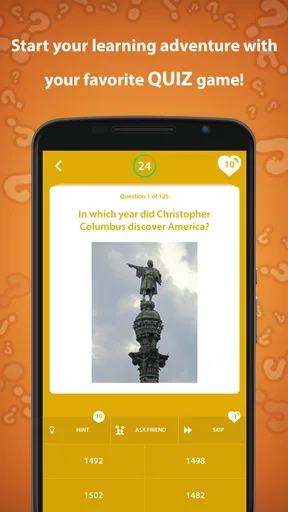
History Trivia Quiz Games is a quiz app focused on historical facts, events, people, civilizations, wars, inventions, and important dates. After trying its question-based gameplay, I found it designed for both casual players and history enthusiasts. Questions are generally presented in a multiple-choice format, allowing users to test their knowledge, learn new information, and improve their results through repeated play.
Is History Trivia Quiz Games suitable for beginners and children?
The game can be suitable for beginners because players do not need previous specialist knowledge to start answering questions. Its accessible quiz format makes it easy to understand, while simpler questions can help younger users develop an interest in history. However, difficulty may vary between categories, so parents should review the content and age rating before allowing children to play.
Does History Trivia Quiz Games work offline?
Whether the game works fully offline may depend on the version installed and the device platform. Basic quiz sessions may be available without a constant internet connection, but features such as advertisements, updates, rankings, statistics, or additional question packs could require access to the internet. It is best to open the app once while connected before attempting to play offline.
Are there ads or in-app purchases in History Trivia Quiz Games?
History Trivia Quiz Games may include advertising or optional purchases, as is common with free trivia applications. Ads can sometimes appear between rounds or after an answer, while paid options may remove advertising or unlock extra content. Before downloading, check the Google Play Store or Apple App Store listing for current pricing, subscriptions, and purchase requirements.
What can I learn by playing History Trivia Quiz Games?
The app can help reinforce knowledge about world history through short, repeatable question rounds. Depending on the available categories, players may encounter topics involving ancient civilizations, famous leaders, political events, scientific discoveries, geography, culture, and historical conflicts. It should be viewed as an entertaining educational tool rather than a complete academic reference, since some explanations may be brief.
Play our best games!


